
Dirndls, lederhosen, comfortable shoes, and how to dress for Oktoberfest without accidentally looking like you escaped from a Halloween party.
Let's talk about the sexy pirates.
If you're heading to Munich's Oktoberfest for the first time, you might be tempted to order a cheap dirndl or lederhosen costume online, toss it in your suitcase, and call it a day.
Please reconsider.
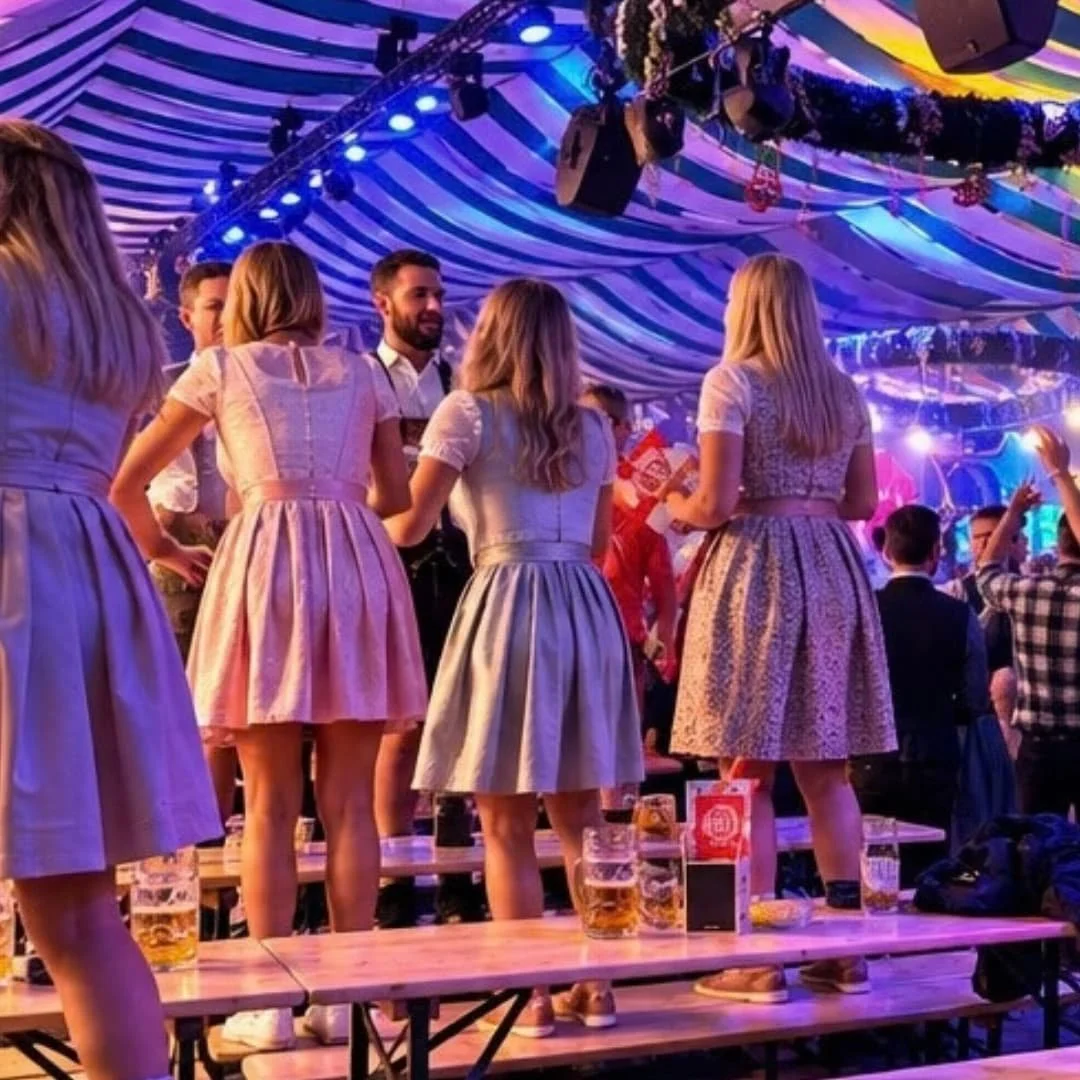
These traditional dirndls were a bit shorter, and I did notice younger women occasionally opting for higher hemlines. But for a full-grown broad like myself, below-the-knee styles were much more common.
Because while Oktoberfest is a semi-ridiculous celebration involving enormous beers, live music, and thousands of people dancing on benches, the Germans take their traditional clothing seriously.
And they can be a little judgy about it.
I saw plenty of tourists dressed in what can only be described as Sexy Pirate Does Bavaria. Shiny polyester, flimsy lace-up bodices, skirts that barely covered their bottoms, and lederhosen that looked suspiciously like hot pants.
And yes, I saw some locals sneering.
Now, I'm all for wearing whatever makes you happy. But if you're hoping to fit in rather than stand out as an obvious tourist, there's a better way. And it doesn't have to cost a fortune.
My son and I bought our traditional outfits in Vienna before attending Oktoberfest 2026. We wore them five times during our trip through Austria and Germany, and here's what I learned about finding the right outfit, getting a comfortable fit, and enjoying Oktoberfest without looking like you're auditioning for a beer-themed Halloween party.
Do You Have to Wear a Dirndl or Lederhosen to Oktoberfest?

This is what Oktoberfest is all about! Thousands of people singing, dancing on benches, making new friends, and celebrating together.
No. There's no official Oktoberfest dress code. You can absolutely show up in jeans and a T-shirt.
But almost everyone we saw at Oktoberfest was wearing traditional Bavarian or Austrian clothing, known as Tracht.
Women generally wear dirndls, while men wear lederhosen, and I think dressing up is half the fun.
There's something wonderful about walking into an enormous beer tent wearing traditional clothing, surrounded by hundreds of other people doing the same. You feel like you're participating in something rather than simply spectating.
My advice? If you can afford to rent or buy a decent outfit, go for it.
But if your budget won't stretch beyond a cheap costume, you might be more comfortable wearing something from your regular wardrobe.
How to Choose a Dirndl That Doesn't Look Like a Costume
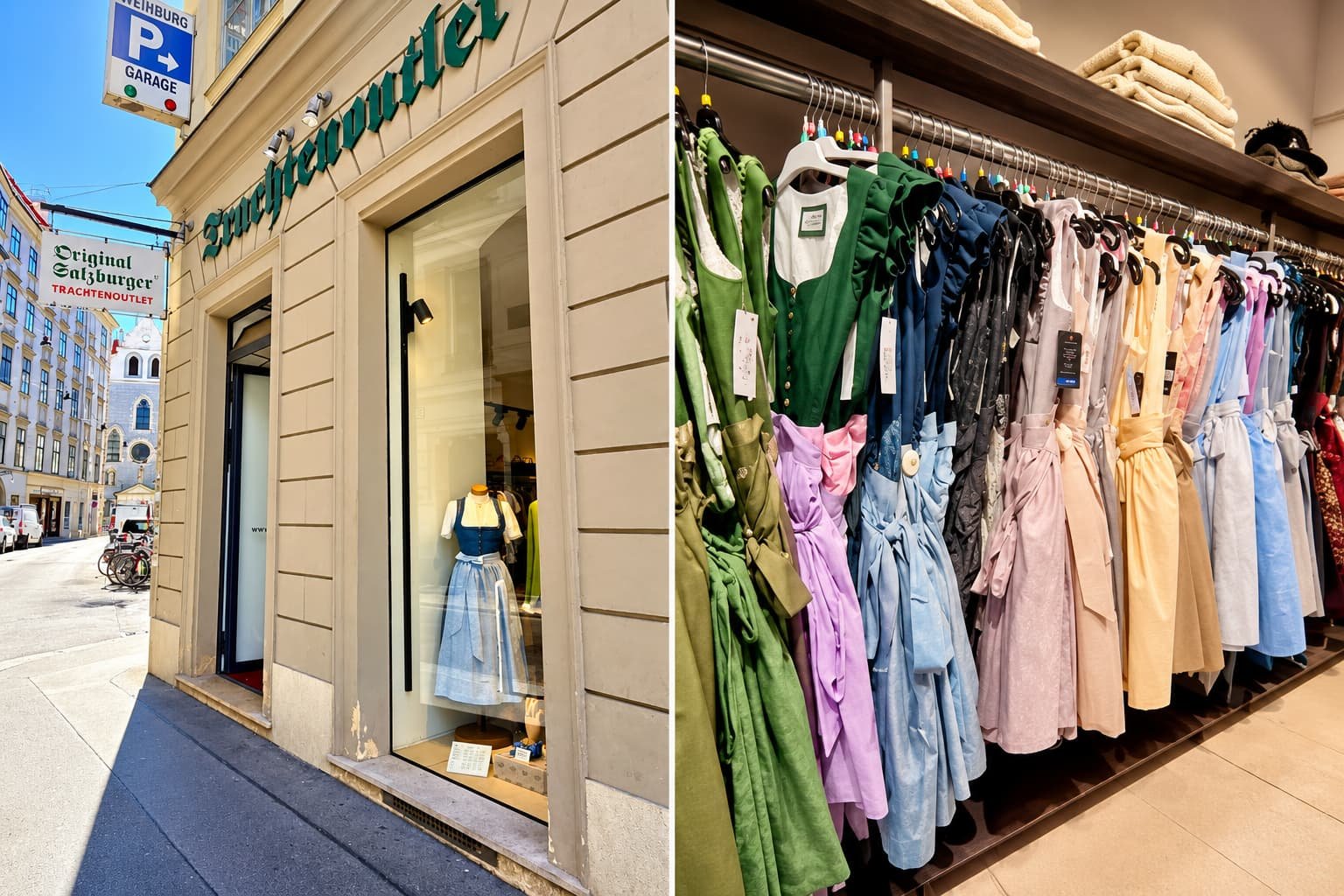
Racks of beautiful dirndls in every color, fabric, and style imaginable.
A traditional dirndl has three main components: a dress with a fitted bodice, a blouse worn underneath, and an apron.
What makes a good one?
Structure, fabric, and fit.
The bodice should fit snugly and have enough structure to support your shape. The fabric should feel substantial rather than flimsy, and the skirt should fall naturally from the waist.
Those inexpensive costumes with thin material and decorative lacing often don't have enough structure to do the job.
Which is where the sexy-pirate problem begins. Flimsy fabric doesn't exactly hold everything in place—or keep everything lifted—if you know what I mean.
How Long Should Your Dirndl Be?
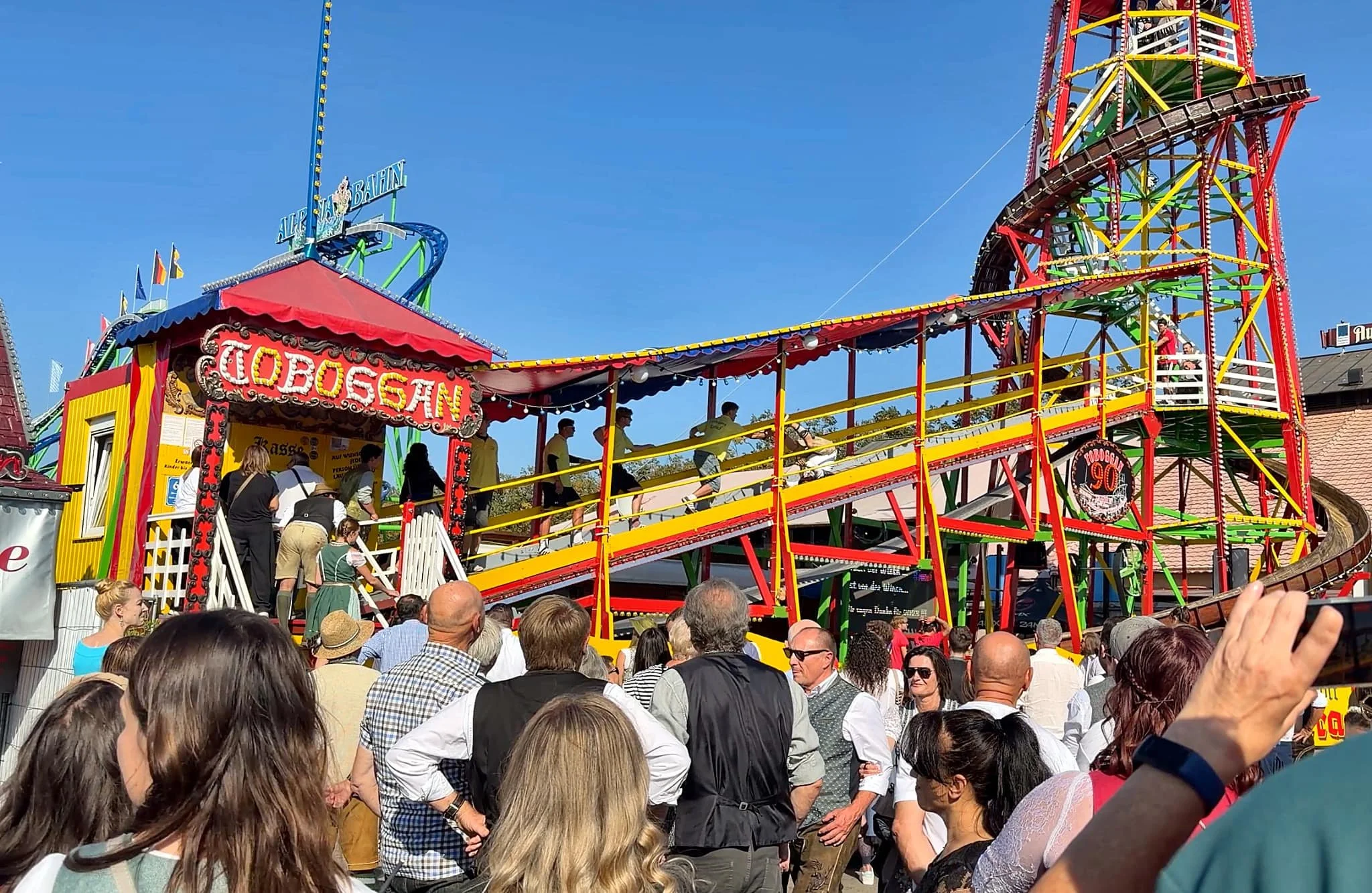
A longer dirndl helps keep things modest when you’re falling down on the toboggan ride.
I heard this advice repeatedly from Germans during our travels:
Your dirndl should reach at least the top of your knee. A little longer is even better.
This isn't an official rule, and shorter dirndls certainly exist. But knee-length or midi styles are a safer choice if you're going for a traditional look. They're also more practical when you're walking around all day, sitting at crowded tables, and climbing onto benches to sing Bon Jovi.
And don't worry. A longer skirt doesn't mean you have to dress like somebody's grandmother.
There are plenty of beautiful, flattering, sexy dirndls with longer skirts.
What About the Cleavage?
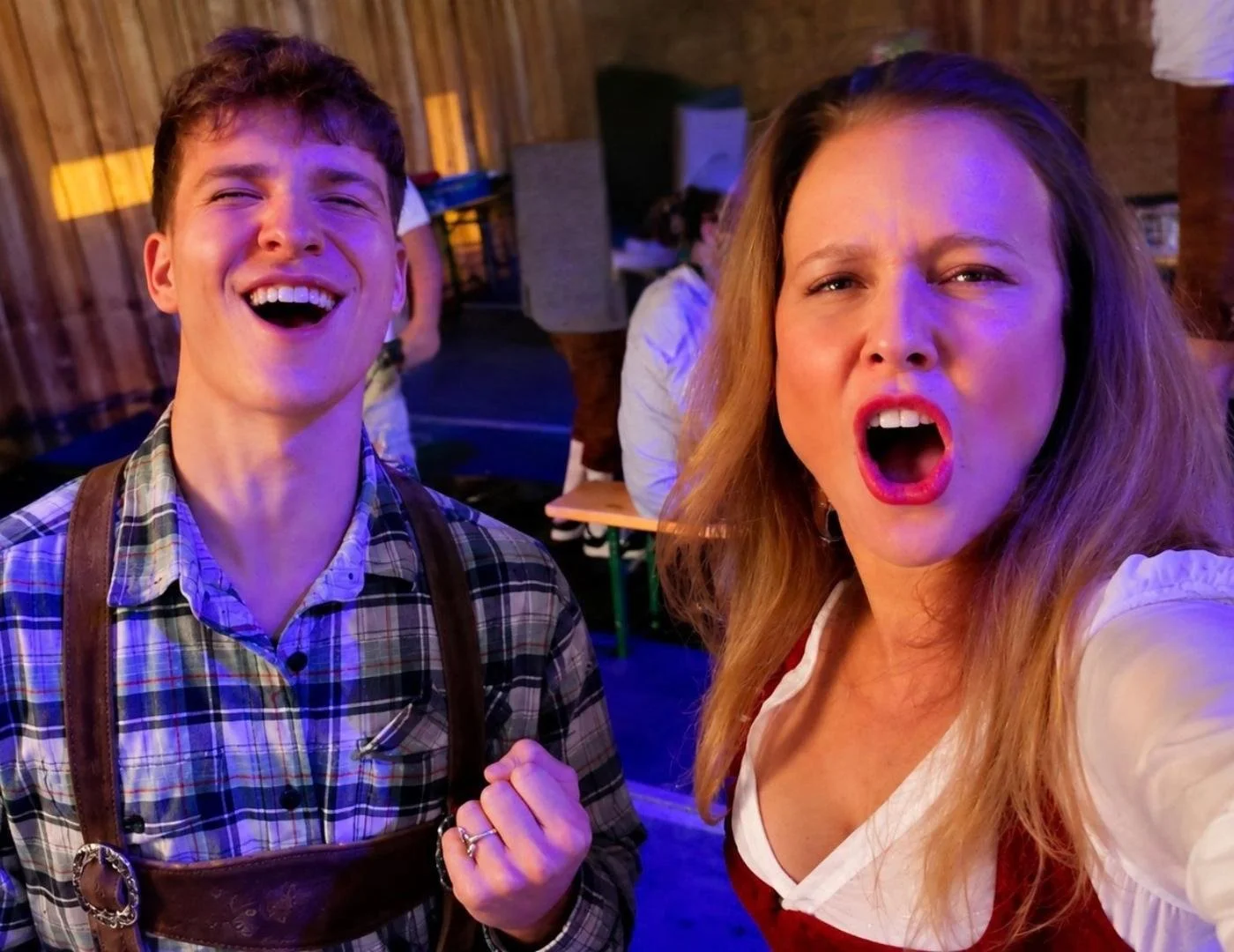
Dressed in our traditional Tracht and singing at the top of our lungs. (Cleavage was singing too, I think. Warbling the song of its people…)
Oh, the cleavage is absolutely welcome.
The Germans might raise an eyebrow at a skirt that barely covers your bottom, but a generous amount of boobage spilling out the top of a dirndl is perfectly acceptable.
It's a fascinating cultural distinction.
Personally, I loved the way my dirndl fit. The bodice was tight enough to make me feel nicely held together, but the skirt was roomy around my stomach.
In other words, I could look fabulous AND have plenty of room for beer and pork knuckle.
I feel like my ancestors were thinking ahead when they designed this outfit…
Don't Forget the Blouse and Apron
One surprise when shopping for dirndls is that the blouses are often sold separately.
And they can be pricey for such a tiny amount of fabric.
Check what's included before you fall in love with a dress. Some come with an apron but no blouse, while others are sold as complete sets.
You might be able to save money by bringing a suitable white blouse from home, although traditional dirndl blouses are cut specifically to work with the low neckline and fitted bodice.
Which Side Should You Tie Your Dirndl Bow?
Traditionally, your apron bow can signal your relationship status. Here's the cheat sheet.
Important: Left and right are from the perspective of the person wearing the dirndl.
It's a fun custom, not a binding social contract. Regional traditions and modern interpretations vary.
But if you're planning to flirt at Oktoberfest, you might as well know what message your apron is supposedly sending.
How Should Lederhosen Fit?
Now for the lesson my son learned the hard way: Buy your lederhosen snug.
Good leather stretches and softens with wear, and you need to account for that when choosing your size.
My son initially opted for a slightly roomier pair because he wasn't comfortable with how revealing the snugger fit was. Unfortunately, by the third wearing, his lederhosen had stretched considerably, leaving them sagging a bit low on the hips.
He got teased a few times by German men on the subway about wearing his grandfather's pants.
Mostly good-naturedly, thankfully.
So, no, you don't want painfully tight lederhosen, but you don't want to buy them loose, either. A good salesperson can help you find something that feels comfortable while allowing for the leather to relax.
What Else Should Men Wear?
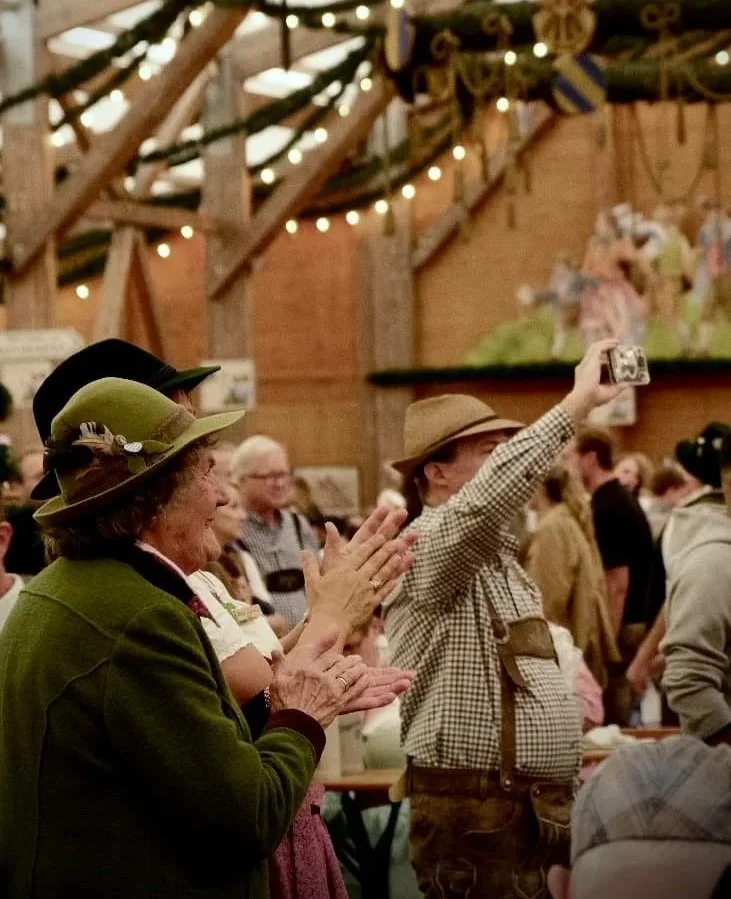
The older generation was well-dressed at Oktoberfest!
The classic outfit includes lederhosen, a shirt, traditional socks, and comfortable shoes.
Checked shirts are popular, but plain white shirts look great too. You may be able to save money by bringing a white linen or dress shirt you already own. We did.
Depending on your budget, you can add suspenders, a vest, or a traditional wool jacket called a Janker.
My son found a beautiful secondhand traditional wool coat at HUMANA in Vienna for just €16. It worked with his lederhosen and looks equally good with jeans. You may also spot men wearing knitted calf warmers without feet. Those are called Loferl, and they're part of traditional Bavarian dress.
You don't need every accessory to look the part.
The important thing is that the outfit fits well and is made from decent materials.
Where to Buy Affordable Dirndls and Lederhosen
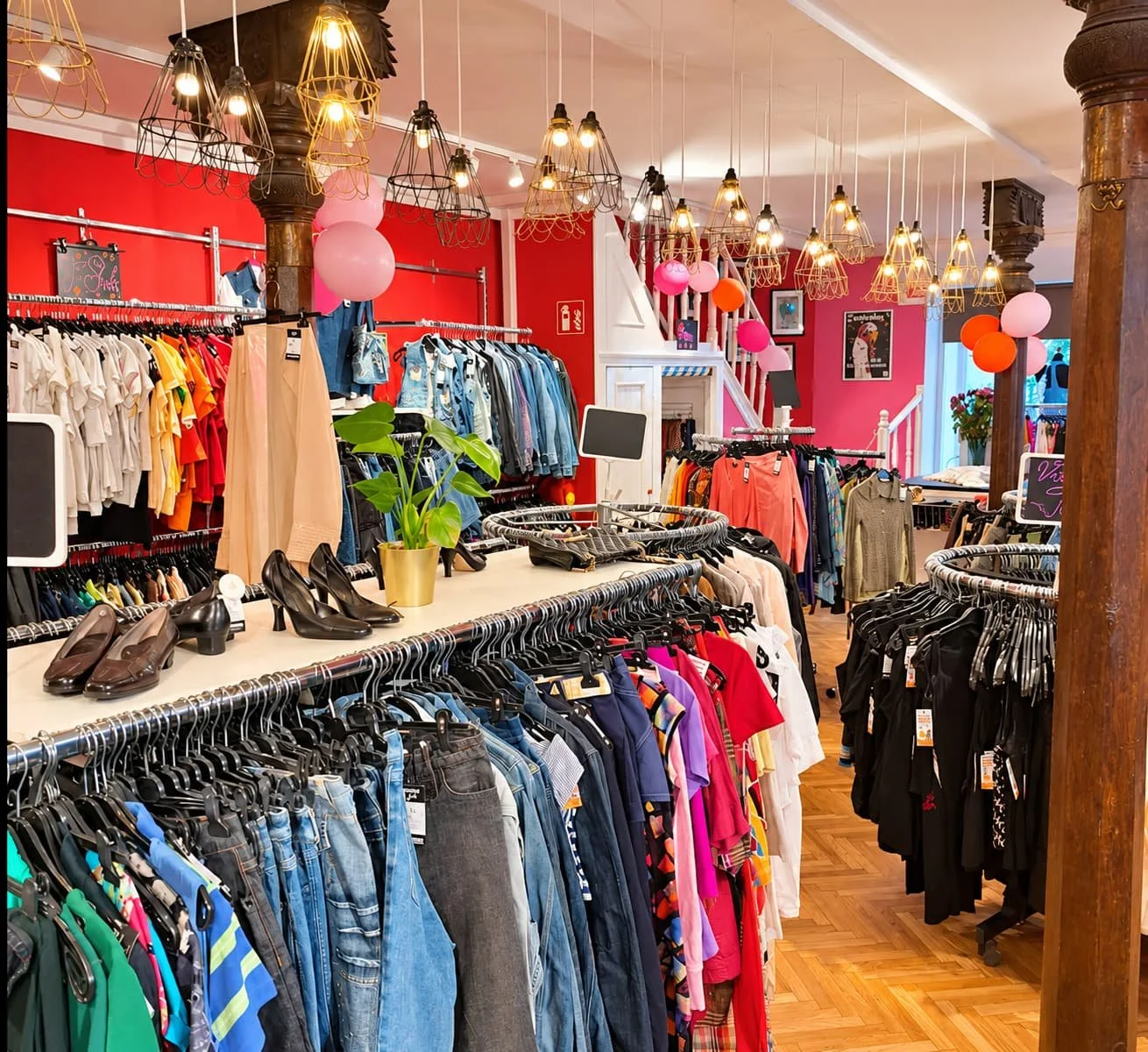
One of the many vintage and resale shops offering traditional clothing options at a discount.
Here's my strongest advice: buy secondhand, shop an outlet, or rent something good rather than wasting money on a disposable costume.
We bought our outfits at Original Salzburger Trachtenoutlet in Vienna, where prices were approximately 30–50% below the original retail prices.
Even with those discounts, I'd budget about €150–€200 per person for a basic complete outfit.
We also found secondhand dirndls in both Vienna and Munich in the €70–€100 range, although finding the right size was another matter.
You can read all about the shops we visited, what we paid, and our shopping experience in my guide to buying dirndls and lederhosen in Vienna.
Should You Buy or Rent for Oktoberfest?
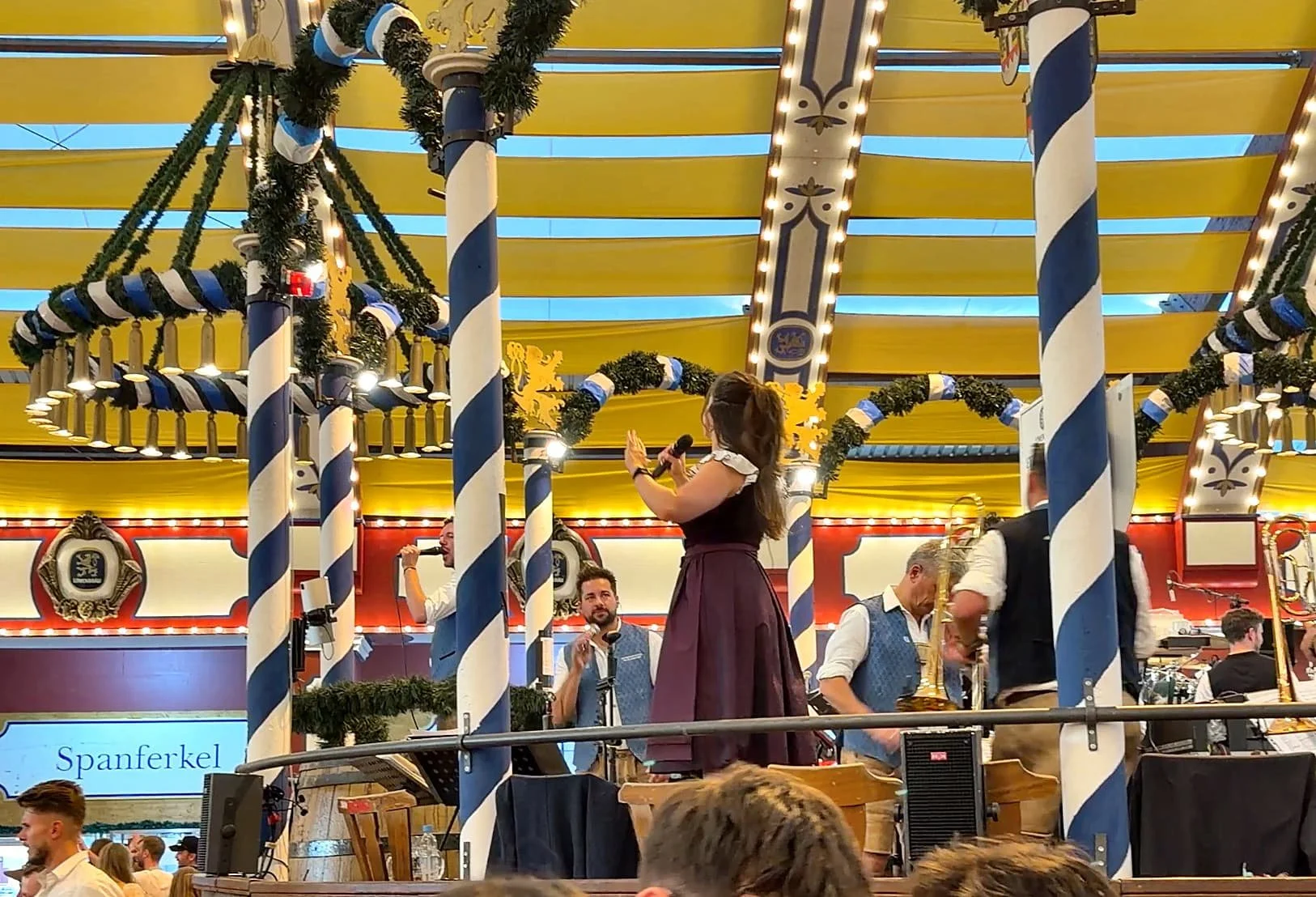
The entertainers also wore traditional dress. So cute!
If you're arriving in Munich a few days before the festival and will be wearing your gear more than one day, I'd recommend browsing secondhand Tracht shops first.
With a little luck, you could assemble a nice outfit for around €130-€150, depending on what you find and which accessories you already own. (Renting gear from a shop was about €70 Euro per 24 hour period in 2026. So even two wearings could make a purchase worthwhile if you ever plan to wear it again.)
There are also new entry-level options that look perfectly respectable without costing luxury-designer prices.
If you're only attending Oktoberfest once, renting may make more sense. But compare the complete rental cost—including deposits and potential cleaning charges—with the price of buying something you'll wear again.
For us, buying was the obvious choice. We had multiple festivals planned, live in Europe, and expect to return to Austria and Germany in the coming years.
We've already gotten plenty of use from our outfits.
Save Money by Bringing Accessories From Home
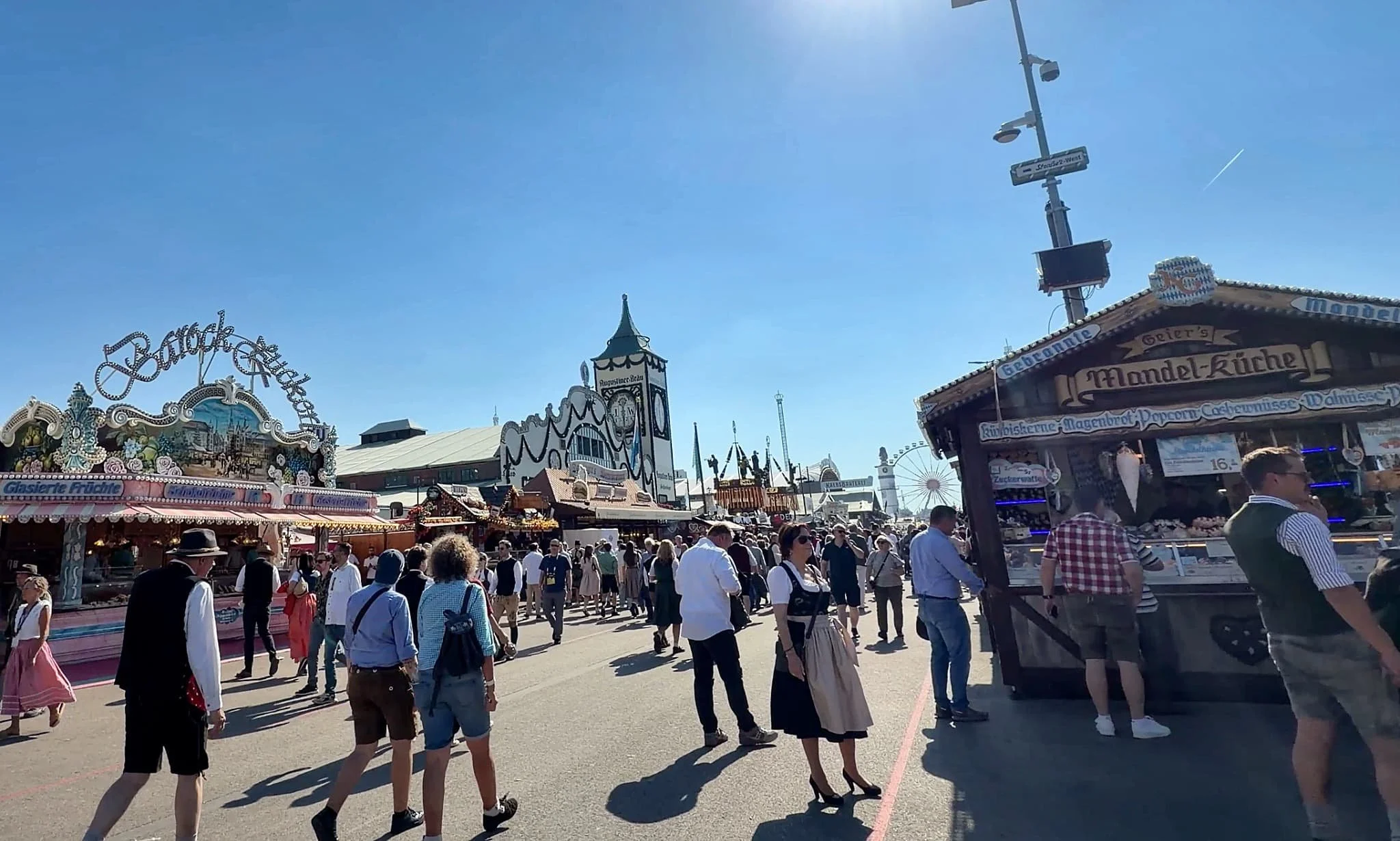
Walking the fairgrounds on the way to the Oktoberfest tents.
This is where a little planning pays off.
We both brought our shoes and socks or stockings from home, which saved us from buying everything at a traditional clothing shop.
If you already own comfortable shoes that work with your outfit, bring them.
The same goes for knee socks, a suitable white blouse, or a cardigan.
Buying an entire outfit from scratch right before Oktoberfest can get expensive, particularly once you start adding all the little extras.
What Shoes Should You Wear to Oktoberfest?
Comfortable ones. But that doesn't mean they can't be fabulous.
The official Oktoberfest website recommends traditional shoes with block heels, pumps, ballet flats, or loafers. It also declares boots a fashion faux pas with a dirndl.
I respectfully disagree.
I wore my gorgeous Victorian-style ankle boots, complete with modest heel, and received compliments on them all day. They're stylish, beautifully made, and comfortable enough to wear for hours of walking, standing, and dancing.

Look at those little boots. So cute. And love my son’s textured socks.
They're also not remotely the same thing as clunky hiking boots.
You don't need expensive designer shoes, though. A pretty pair of Mary Janes, low-heeled pumps, or comfortable shoes with decorative buckles can work beautifully.
The real test? Can you spend seven hours in them, dance on a wooden bench without breaking your neck, and survive the occasional spilled beer?
If yes, congratulations. You've found your Oktoberfest shoes.
Traditional fashion police be damned.
What Bag Should You Carry?
I used a small fanny pack, and it was perfect. Not the most traditionally Bavarian accessory, perhaps, but practical.
I could keep my phone, cash, and other essentials close without having to worry about a handbag in a packed beer tent.
Oktoberfest has size restrictions on bags, so check the current rules before arriving.
Personally, I'd skip expensive handbags, delicate accessories, and anything you're terrified of losing or damaging.
Is It Hot Inside the Oktoberfest Tents?
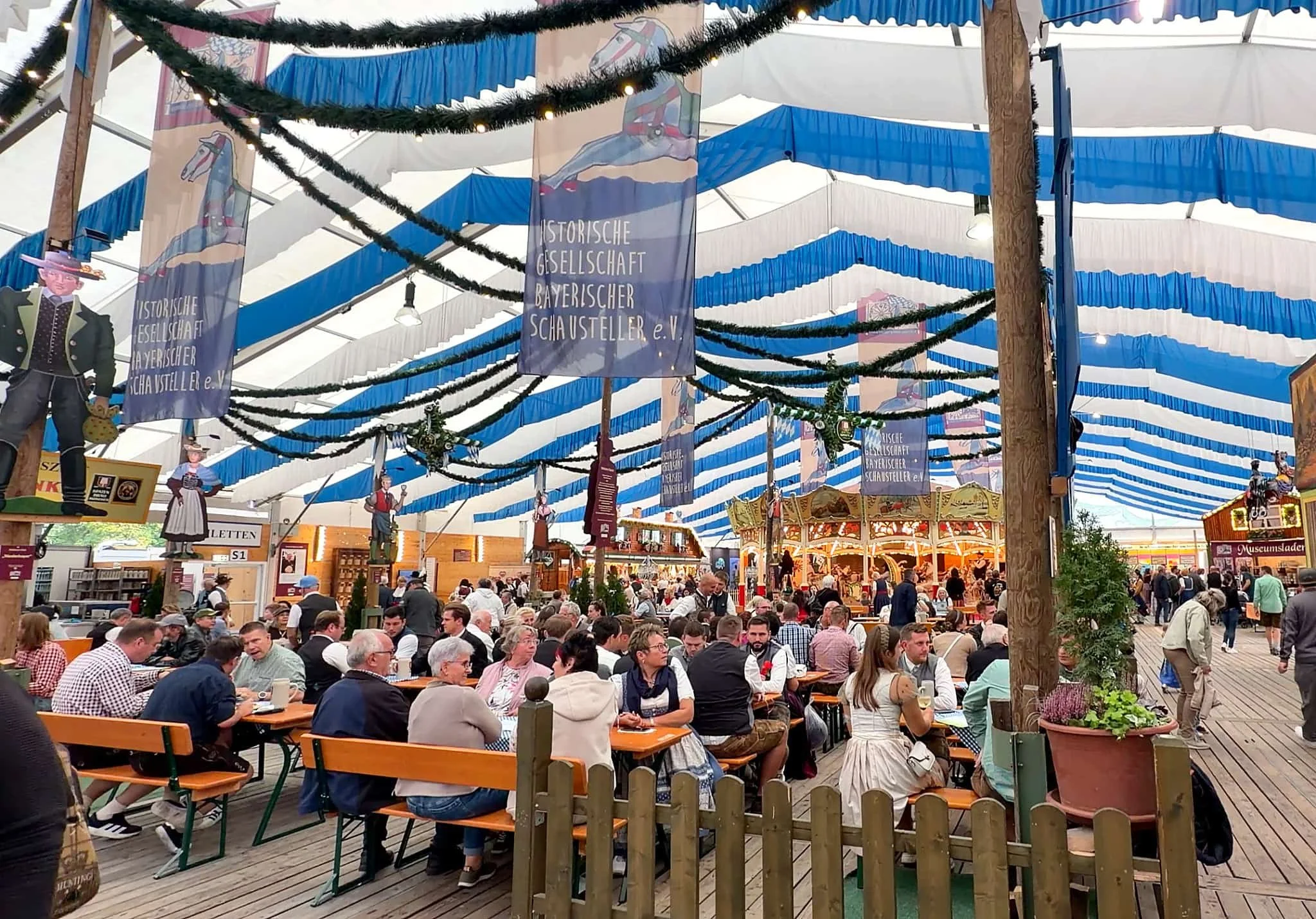
Earlier in the day, the tents can be comfortable. But things heat up as crowds increase.
Yes!
Remember that Oktoberfest takes place mostly in September, when Munich can still be quite warm.
Once the tents fill with thousands of people singing, dancing, and drinking, it gets even warmer.
My dirndl was comfortable throughout our visits, and my son was perfectly happy in his outfit, aside from the unfortunate expanding-lederhosen situation. But we did sweat. Quite a bit.
I'd choose breathable fabrics where possible and avoid heavy layers inside the tents.
But bring something suitable for cooler evenings. A cardigan or traditional jacket can be useful when you head back outside after hours in a warm beer tent.
Is Buying a Dirndl Worth It for Just One Oktoberfest?
That depends on whether you think you'll ever wear it again.
If you're taking a once-in-a-lifetime trip to Munich and can't imagine another occasion for traditional clothing, renting might be smarter.
But if you enjoy festivals or expect to return to Austria or Bavaria, buying something good can absolutely be worth it. We wore our outfits five times during our trip alone, including festivals in Vienna, Salzburg, and Munich.
My Final Oktoberfest Fashion Advice
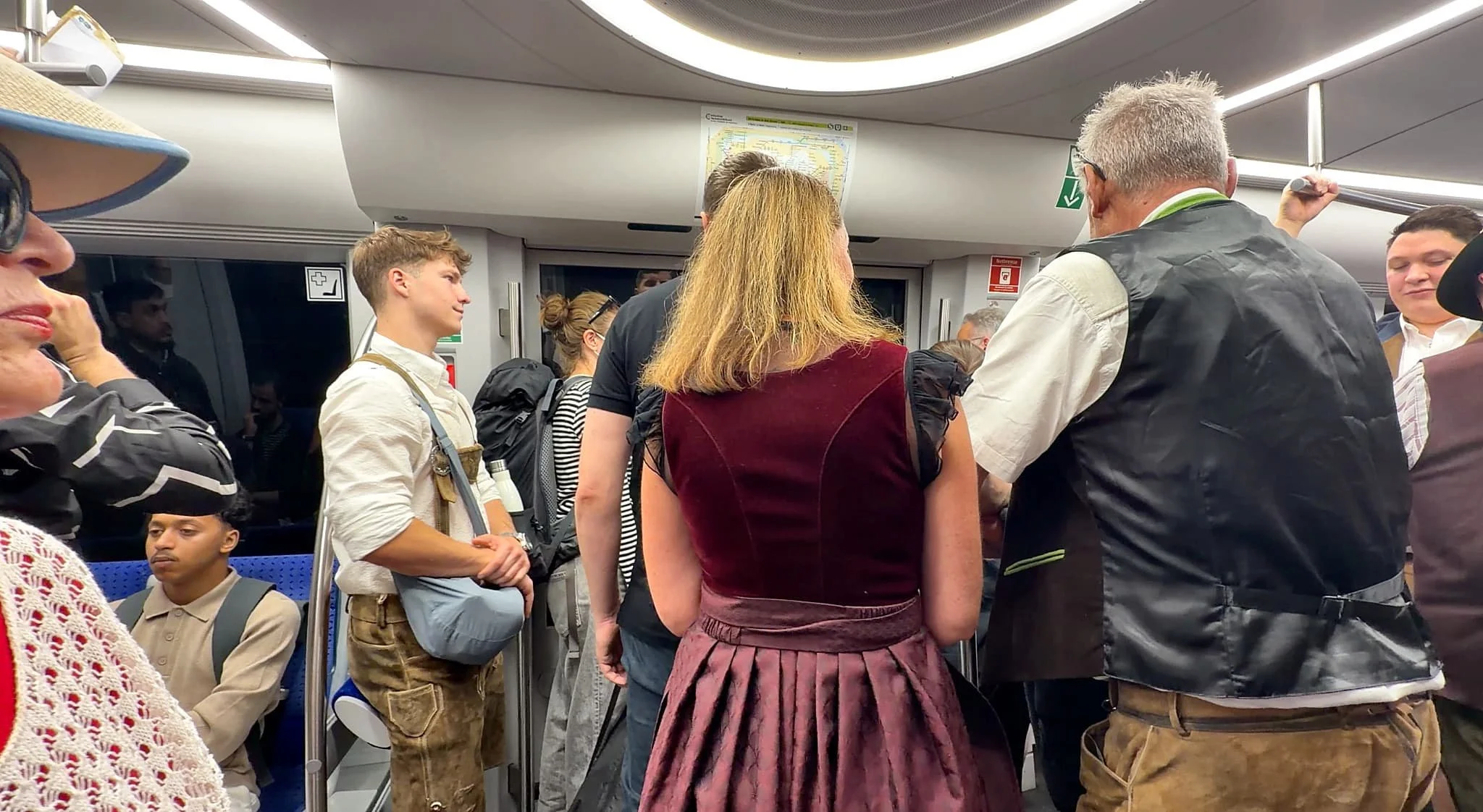
On the way home, tired, but happy and full of beer and pretzels.
You don't have to spend a fortune to look good at Oktoberfest, and you certainly don't have to pass some imaginary German traditional-clothing inspection.
Still, there's a difference between participating in a tradition and dressing in a novelty beer-wench costume from Amazon.
Most importantly, wear something you can actually enjoy yourself in.
Because if you're constantly tugging at your skirt, adjusting your falling-down lederhosen, or trying to keep your cheap corset from exploding, you're missing the point.
The point is to drink beer, sing badly, make friends, and have a glorious time.
Preferably without looking like a sexy pirate.
Planning your first Oktoberfest? Read my Oktoberfest First-Timer's Guide for our real spending breakdown, beer-tent recommendations, and practical advice from our 2026 visit.
