
Vienna looks like a city that has everything under control.
Clean streets. Gorgeous buildings. Palaces with enough gold to suggest someone should have been supervising the decorating budget.

Inside the courtyard of Vienna’s Narrenturm, where even the architecture feels ominous before you see a single exhibit.
Then you start looking into what’s underneath: Bones. Burial vaults. Bizarre old medical treatments. A museum devoted to funerals.
Well. Now you have my attention.
I love Vienna's art and imperial beauty, but I also like the places that complicate the picture. On my latest visit, one of those places was the Narrenturm, a former psychiatric institution that now houses a pathological-anatomical collection. It was disturbing, thought-provoking, and absolutely worth a morning. It also made the phrase “the good old days” feel chilling.
If you're looking for creepy things to do in Vienna, this guide covers the city's medical history, catacombs, crypts and funeral culture, with a little folklore along the way. I visited Narrenturm myself. The other Vienna crypts, catacombs and funeral sites below are researched options I haven’t visited yet, and I’ll make it clear where my own experience ends and the research begins.
You don't need to believe in ghosts to find this side of Vienna fascinating. The history supplies plenty to think about all by itself.
Narrenturm: The Vienna Medical Museum I Was Glad I Visited
There are museums where you leave wishing you could live in another century.
Narrenturm was not one of them.
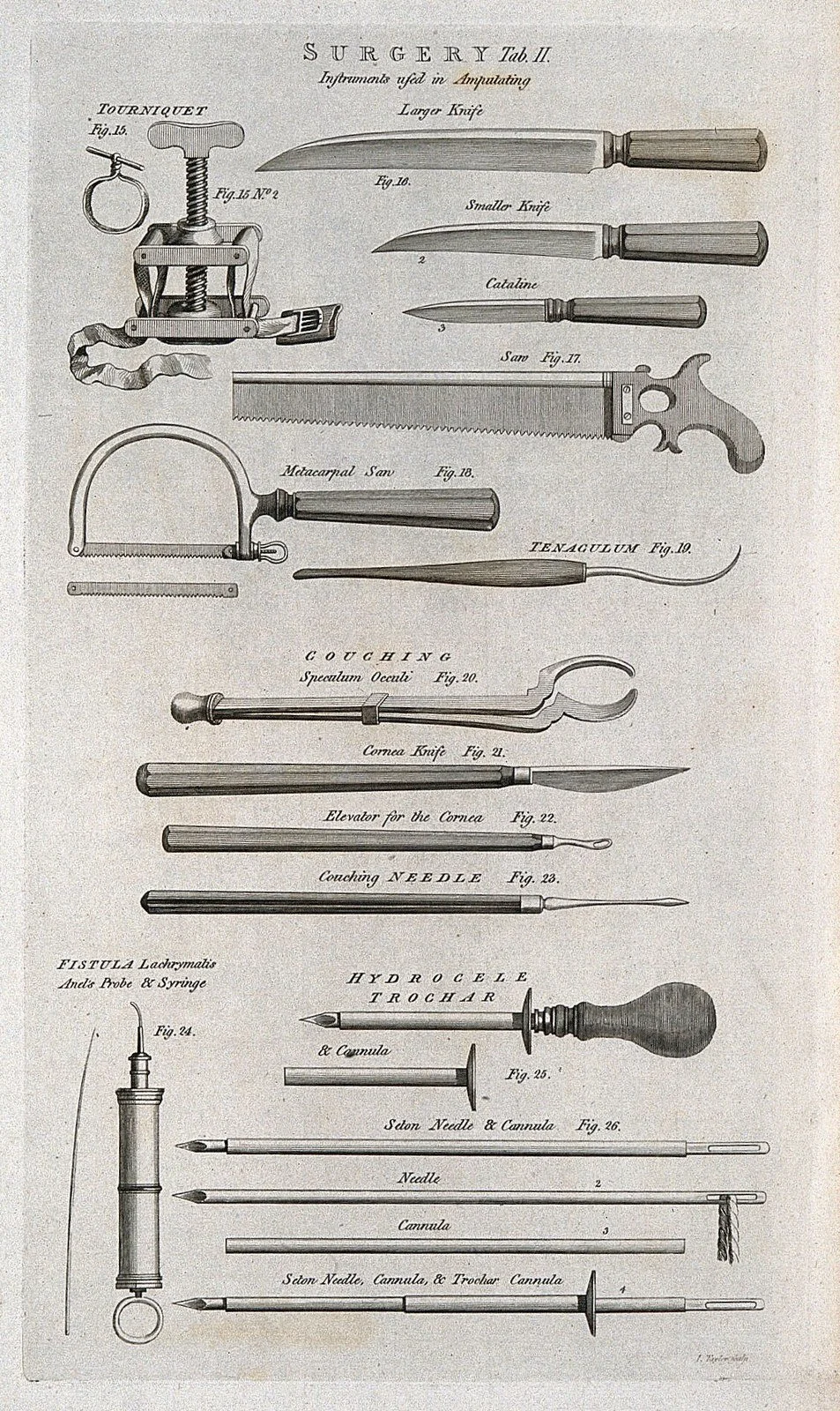
Historical surgical instruments, engraved by J. Taylor. Wellcome Collection.
The Narrenturm, often translated as the “Fools’ Tower,” opened in 1784 as an institution for people with mental illness. Today, it houses the Natural History Museum Vienna’s pathological-anatomical collection, with exhibits exploring disease and the history of medicine through anatomical specimens, models and historical material.
The history of the institution and the diseases on display were disturbing. They reminded me how difficult being human has always been, particularly when you were ill, vulnerable or dependent on whatever treatment happened to be available at the time.
As a person with chronic illness, who has had several tumors removed, I was very aware that in another century, my own life could have been far darker, more painful, and shorter.
I was glad I went. I even enjoyed the visit, although enjoyed is a strange word for an experience that can leave you fascinated and profoundly grateful to be alive in a time with less barbaric medical care.
Vienna’s palaces show you what extraordinary wealth could buy. Narrenturm made me think about how much harder life has always been for the sick and the poor. The perspective stayed with me.
Is Narrenturm Worth Visiting?
If you’re interested in medical history, unusual museums or a more complicated view of the past, I’d say yes.
But go because the subject genuinely interests you.
An apothecary preparing a prescription, engraved by Johann Christoph Weigel, 1695. Wellcome Collection.
The collection includes preserved human anatomical specimens and displays concerning disease. If that kind of material is upsetting to you, there’s no reason to force yourself through it because a travel blog called it fascinating.
For teenagers, I’d consider the individual person’s curiosity and comfort level rather than treating age alone as the deciding factor. My 17-year-old was completely fine here; I wouldn’t bring my 22-year-old, who has a much harder time stomaching this much darkness. Know your people, talk about it together, and make the call accordingly.
Afterward, give yourself time to walk through the old hospital campus, now part of the University of Vienna. I loved that part of the visit, too. We also stopped at nearby Votivkirche and ate at Restaurant Roth, where the food and dessert were among the best we had in Vienna.
A good lunch is a very reasonable thing to arrange after contemplating historical disease..
St. Stephen's Catacombs: Beneath Vienna's Most Famous Cathedral
Researched option; I have visited St. Stephen's Cathedral, but not these catacombs.
I've been to several catacombs, and I understand the pull. A city feels different when you consider the people buried beneath it. Death stops being a distant historical statistic and becomes part of the place you're standing in.
That is the appeal here: a different layer of a landmark you may already know.
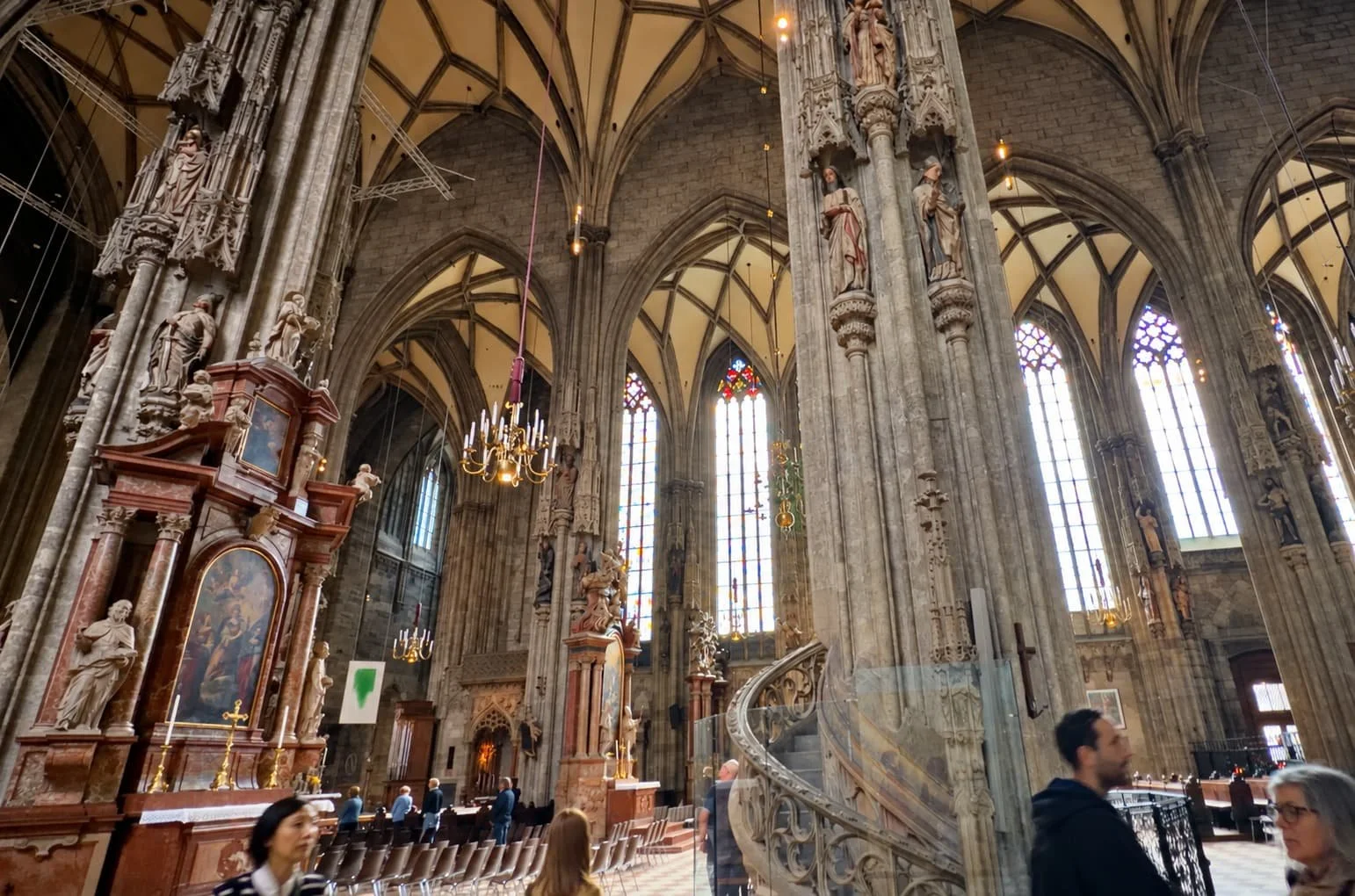
Inside St. Stephen’s Cathedral, all soaring stone and filtered light above the burial spaces hidden beneath Vienna’s busiest square.
St. Stephen’s Catacombs can only be visited on a guided tour. The cathedral describes a route through bishops’ and royal tombs before continuing into the underground cemetery beneath the square, where visitors see human remains.
If you’ve already admired St. Stephen’s above ground, the catacombs offer a completely different perspective: the busy square and ornate cathedral overhead, and centuries of burial space below.
Planning detail: The cathedral is at Stephansplatz 3. Check the official catacombs information for current tour times and languages before you go. The cathedral’s general opening hours do not mean the catacombs are open for independent visits.
This is an active historic burial site containing human remains, so go prepared for that and follow the guide’s instructions about behavior and photography.
Michaelerkirche Crypt: Coffins and Mummies Near the Hofburg
Researched option; I haven't visited this crypt.
The Michaelerkirche Crypt belongs on this list for its coffins, skeletons and mummified remains. It sits at Michaelerplatz 5, right near the Hofburg, making it an easy addition even if your interests have taken a rather darker turn from the standard palace tour.
A skeleton contemplating a skull in Andreas Vesalius’s anatomical atlas. Courtesy of the National Library of Medicine.
The crypt developed over centuries as individual burial vaults were gradually connected beneath the church. Burials there ended after Emperor Joseph II prohibited further burials within Vienna’s inner city in the late 18th century.
The draw for me is the encounter with actual people from the past. It’s one thing to read a date on a tomb. Seeing human remains makes the distance between then and now feel much smaller.
Check the English Tour Before You Plan the Day
The church currently offers a public English tour on Saturdays at 11 a.m., lasting about 45 minutes, for €10 per adult. German-language tours run at other scheduled times, and private English tours can also be arranged. Church holidays and seasonal closures can affect availability.
Photography and filming are prohibited. Tours meet outside the church’s main entrance, so check the official crypt-tour page before making the trip.
I’d arrange my plans around a tour I could understand. The burial history is really the point here; getting underground without understanding the explanation would lose a lot of the experience.
The Funeral Museum: Vienna Has Thoughts About How to Leave This World
Researched option; I haven't visited the museum or Vienna's Central Cemetery.
The Bestattungsmuseum, or Funeral Museum, explores Vienna’s burial customs and funeral history at the Central Cemetery.
Its account of Viennese funeral culture leans into both elaborate ceremony and the inevitability of death. The collection includes funeral transport, uniforms, a folding coffin from Joseph II’s era, and objects connected with the very real historical fear of being buried alive.
The museum also has a gift shop known for its dark humor. I appreciate a place willing to acknowledge that death is serious and humans are still humans.
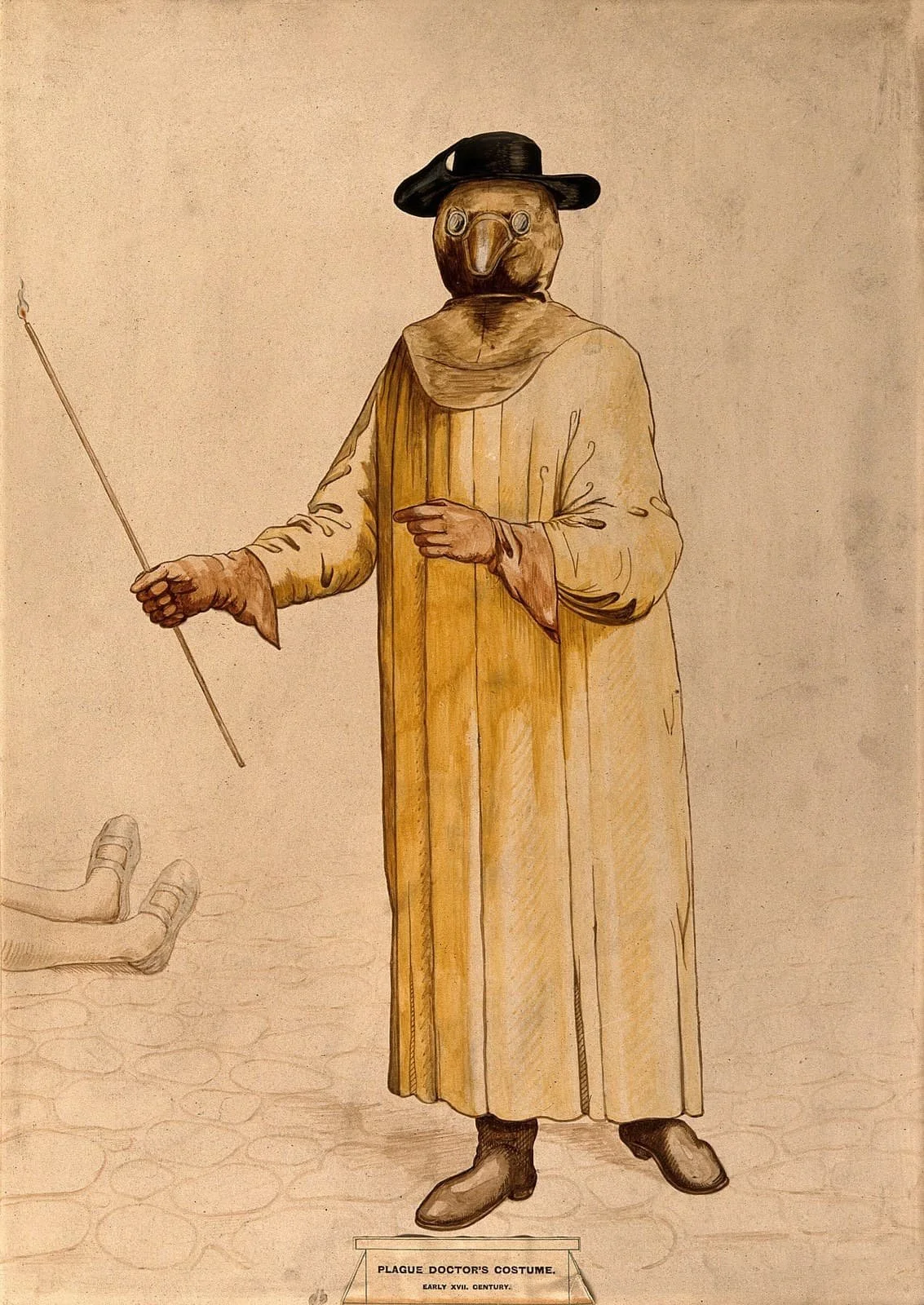
Watercolour depicting a physician in seventeenth-century plague protective clothing. Wellcome Collection.
Plan the Museum and Cemetery Together
The museum is near Gate 2 of the Central Cemetery, at Simmeringer Hauptstraße 234, beneath funeral hall 2. Current regular hours are Wednesday–Friday, 10 a.m.–4 p.m., with adult admission listed at €9.
Trams 11 and 71 stop at Zentralfriedhof 2. Tor. Because this is outside Vienna’s main sightseeing cluster, I’d plan the museum and a cemetery walk together rather than making a separate trip.
Check the museum’s visitor information and the cemetery’s current opening hours before you go.
A Little Spooky Vienna: The Basilisk of Schönlaterngasse
After disease, bones and burial customs, a monster feels almost like light relief.
One of Vienna’s old legends places a basilisk in a well at Schönlaterngasse 7. In the best-known version, a brave boy confronts it with a mirror, and the creature is destroyed by its own reflection.
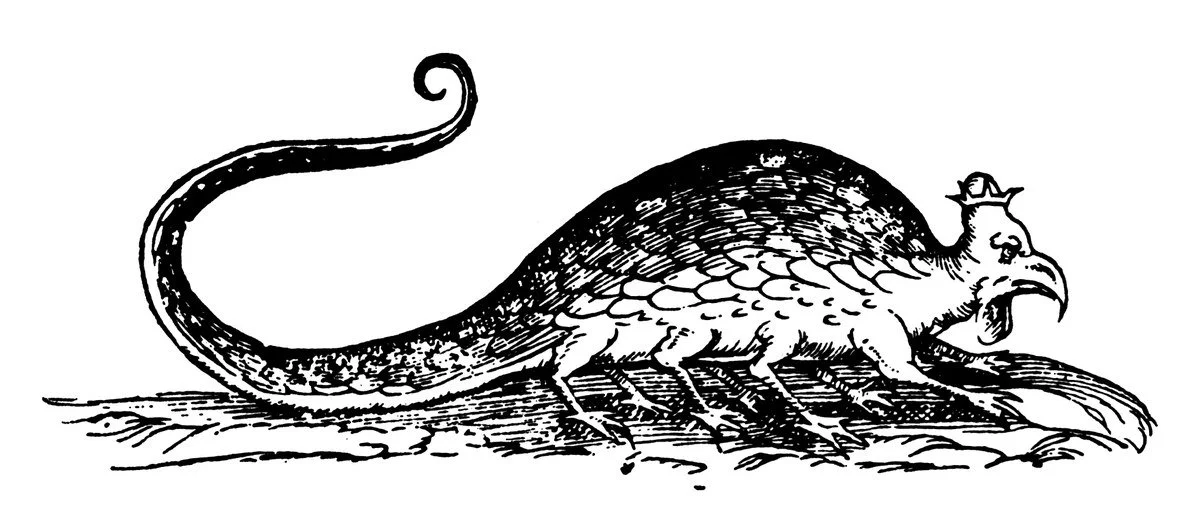
A basilisk illustration from Ulisse Aldrovandi’s Serpentum et draconum historia, 1640.
This is folklore, not a documented monster incident, but the story is still tied to this street through the basilisk house sign.
That’s part of what I like about old cities. The buildings hold history, but they also hold the stories people told about danger, strange happenings, and things they couldn’t explain.
Treat Schönlaterngasse as a quick outdoor detour while exploring the old town. The address is real; the basilisk is the story attached to it. This isn’t an attraction you enter.
Want more of Vienna’s unsettling stories? Watch my Vienna spooky-stories episode on Too Much Abroad.
How I'd Fit Vienna's Darker Sights Into a Trip
I’d choose one main dark-history experience and leave room to enjoy the rest of the day. You do not need to spend an entire holiday working through every available form of mortality.
For medical history: Narrenturm, the old hospital campus, Votivkirche and lunch at Roth. This is the combination I can recommend from my own visit.
For burial history in the centre: Choose St. Stephen’s Catacombs or the Michaelerkirche Crypt around a confirmed tour time, then add an old-town walk and Schönlaterngasse if you want a folklore detour.
For funeral culture: Visit the Funeral Museum and allow time for the Central Cemetery.
If you want to see both central crypts, you can, but you do not need both to get a sense of Vienna’s burial history.
For mobility needs or concerns about enclosed spaces, contact the site before booking an underground tour.
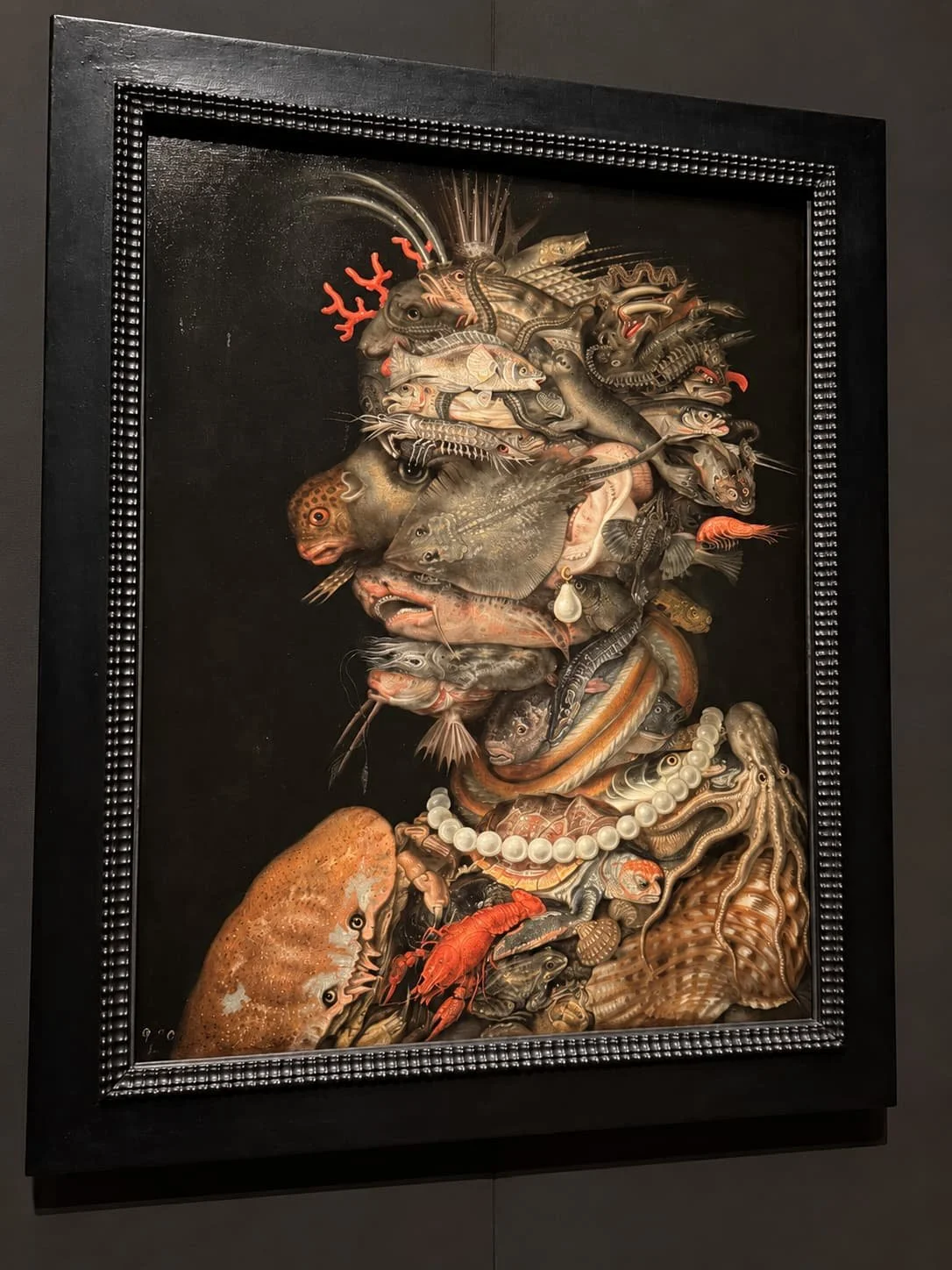
Giuseppe Arcimboldo’s Water (1566) at the Kunsthistorisches Museum Vienna. A human portrait assembled from more than 60 aquatic creatures—and proof that Vienna’s unsettling side isn’t confined to crypts and medical museums.
Is This Side of Vienna for You?
If you enjoy medical history, burial customs, old legends and places that make the past feel personal, there is plenty here to investigate.
Narrenturm reminded me that history was not only emperors choosing paintings and commissioning magnificent rooms. It was also ordinary people living in difficult bodies, becoming ill, needing care, and trying to make sense of what happened to them while being treated in ways that were often far from compassionate. That is why I was glad I went. It made my picture of Vienna more complete.
I still want the gorgeous buildings, the gardens, and the good food.
But I also want to know what’s beneath the floor. Because remembering the darker parts of the past matters, too.
Planning the rest of your visit? My three-day Vienna itinerary covers the major sights, Best Time to Visit Vienna compares seasons, Why I Came Back to Vienna explains what made me want more time here, and Why I Stay Near Belvedere covers one of my favorite areas to use as a base.
